The Tassels
by Saadat Hasan Manto - Translated from the Urdu by Ammar Yasir

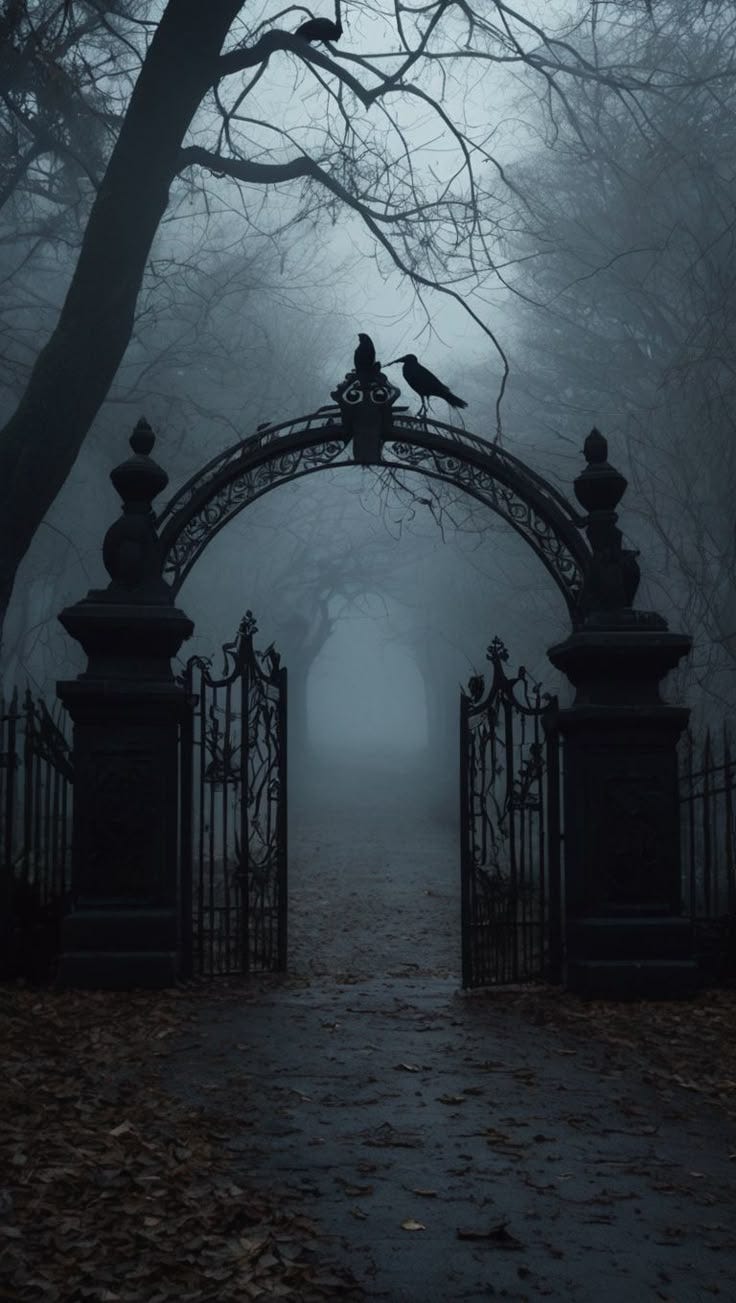
In the vast garden adjoining the kothi,¹ a cat had given birth behind the bushes, and the tom had eaten the kittens. Then a bitch had given birth, and her young had grown large, barking day and night inside and outside the kothi, scattering filth everywhere. They were given poison. One by one, all of them died. Their mother too. Their father, no one knew where he was. Had he been there, his death too would have been certain.
God knows how many years had passed. The bushes of the garden adjoining the kothi had been trimmed and pruned hundreds and thousands of times. Several cats and bitches had given birth behind them, and not a trace of any remained. Her ill-mannered hens would often lay eggs there, which she would gather every morning and carry inside.
In that very garden, some man had murdered their young maidservant with great cruelty. Around her neck was twisted her red silk drawstring with its tassels, which she had bought two days earlier from a peddler for eight annas.² The murderer had wound it so violently that her eyes had bulged from their sockets.
Seeing her, a fever so violent had seized the mistress that she had fallen unconscious, and perhaps she was unconscious still. But no, how could that be, for long after that murder the hens had laid eggs, no, the cats had given birth, and a wedding had been celebrated. There had been a bitch with a red dupatta³ around her neck, a mukesh-work⁴ dupatta, shimmering and glinting. Her eyes were not bulging outward; they were sunken inward.
A band had played in the garden. Soldiers in red uniforms had come, pressing colourful bagpipes under their arms, producing strange sounds from their mouths. Several tassels hung from their uniforms, which people plucked one by one and tied into their own drawstrings. But when morning came, not a trace of them remained. All had been given poison.
Whatever possessed the wretched bride, she gave birth not behind the bushes but on her very bed, to a single child, round and fat, red as a tassel. Her mother died. Her father too. Both were killed by the child. The father, no one knew where he was. Had he been there, his death too would have joined theirs.
The soldiers in red uniforms, their great tassels dangling, vanished and never returned. Tomcats prowled the garden, staring at her, taking her for a basket full of offal, though the basket held only oranges.
One day she took out two of her oranges and placed them before the mirror. Standing behind it, she looked for them, but they could not be seen. She thought it was because they were too small, but even as she thought this, they grew large, and she wrapped them in silken cloth and placed them on the mantelpiece.
Now the dogs began to bark. The oranges began to roll across the floor. They bounced on every floor of the kothi, leapt through every room, and rolling and bounding, went racing through great gardens. The dogs played with them and quarrelled among themselves. For some reason, two of those dogs ate poison and died. Those that remained were devoured by their middle-aged, robust maidservant, the one who had come in place of the young girl whom some man had murdered, slipping the tasselled drawstring around her neck.
There was her mother. Six or seven years older than the middle-aged maidservant, but without her robustness. Every morning and evening she went for a drive in the motorcar, and like her ill-mannered hens, laid eggs in distant gardens behind the bushes. Neither she nor the driver would bring them back. She made omelettes. The stains fell on her clothes. When they dried, she would throw them into the garden behind the bushes, where kites would swoop down and carry them away.
One day her friend came. Pakistan Mail, motor number 9612 PL. The heat was great. Daddy was in the hills. Mummy had gone out for a drive. They were dripping with sweat. No sooner had she entered the room than she removed her blouse and stood beneath the ceiling fan. Her breasts, which had been boiling, cooled down slowly. Her own breasts, which had been cool, began to boil slowly. At last both sets of breasts swayed and clinked like bangles and turned into sour lassi.⁵
This friend’s band was played. But those uniformed soldiers did not come to wave their tassels. In their place were brass vessels, small and large, from which sounds emerged, thunderous and soft, soft and thunderous. When this friend was met again, she announced that she had changed. And truly she had changed. She now had two bellies. One old, one new. One mounted upon the other. Her breasts had curdled.
Then her brother’s band was played. The middle-aged robust maidservant wept a great deal. Her brother consoled her at length. The poor woman had been reminded of her own wedding. Through the night, her brother and his bride quarrelled. The bride wept; the brother laughed. When morning came, the middle-aged robust maidservant took the brother away to console him. The bride was bathed. In her shalwar⁶ lay her red tasselled drawstring. One cannot say why it was not tied around the bride’s neck instead.
Her eyes were very large. Had her throat been throttled with force, they would have protruded like the eyes of a slaughtered goat, and a violent fever would have seized her. But the first one had still not broken, or perhaps it had broken, and this was a new fever in which she remained unconscious still.
Her mother was learning to drive. The father lived in a hotel. He came occasionally, met with his son, and left. The son occasionally summoned his wife home. Every two or three days, when some memory tormented the middle-aged robust maidservant, she would begin to weep. He would console her, she would coax him along, and the bride would depart.
Now she and the bride, the bhabhi,⁷ both went out for drives together, the friend too, Pakistan Mail, motor number 9612 PL. Driving on, they would find themselves at Ajanta,⁸ where the art of painting was taught. Looking at the paintings, all three would themselves become paintings. Colours upon colours, red, yellow, green, blue, all of them screaming. The creator of those colours would silence them. He had long flowing hair.
In winter and summer alike he wore an overcoat; he was handsome enough in appearance, and always wore wooden sandals, indoors and out. Having silenced his colours, he himself would begin to scream. All three would then silence him, after which they themselves would begin to shriek. All three painted hundreds of works of abstract art at Ajanta. In one woman’s every painting, the female figure had two bellies, in different colours. In the second woman’s paintings, the female figure was always middle-aged and robust. In the third woman’s paintings, there were tassels upon tassels, a great clutch of drawstrings.
The abstract paintings continued. But the breasts of all three dried up. The heat was immense, so much so that all three were drenched in sweat. Entering the khus-curtained⁹ room, they removed their blouses at once and stood beneath the ceiling fan. The fan turned and turned. Neither coldness nor warmth entered their breasts.
Her mother was in the next room. The driver was wiping Mobil oil from her body.
Daddy was at the hotel, where his lady stenographer was rubbing eau de cologne onto his forehead.
One day her own band was played too. The desolate garden became festive again. The owner of the Ajanta Studio had decorated the flowerpots and the doorways. The great deep lipsticks took fright at his scattered colours and fled. One, which was darker than the rest, fled so far that it fell right there and became his student.
He had also designed her bridal costume and had created a thousand dimensions within it. Viewed from directly in front, she appeared to be a bundle of multi-coloured drawstrings. Step a little to one side and she was a basket of fruit. Move to another angle and she was a phulkari¹⁰ curtain hanging in a window. Step behind her and she was a heap of crushed watermelons. Shift the angle slightly and she was a jar filled with tomato sauce. Seen from above, she was singular art. Seen from below, she was the obscure poetry of Mera Ji.¹¹
Connoisseur eyes exclaimed in delight. The groom had been so moved that on the very second day of the wedding he resolved to become an abstract artist himself. Accordingly, he went to Ajanta with his wife, where they discovered that the owner was himself getting married and had been residing for some days at the home of his intended bride, the very dark lipstick that had been darker than all the others. For the first few months, her husband retained interest in the lipstick and in abstract art, but when the Ajanta Studio closed down and no news could be obtained of its owner from any quarter, he took up the salt trade, which proved most profitable.
In the course of this business he encountered a girl whose breasts had not dried up. He found them to his liking. No band was played, but a marriage took place. The first wife took her brushes and went away to live apart. This estrangement was at first a source of bitterness for both of them, but later transformed into a strange and peculiar sweetness. Her friend, who had changed her second husband and journeyed through all of Europe and was now afflicted with consumption, painted this sweetness in cubic art. There were countless translucent crystal cubes arranged among thorny succulent plants in such a manner that two figures had formed within them, and upon these, honeybees sat drinking nectar.
Her second friend took poison and killed herself. When this sorrowful news reached her, she fell unconscious. One cannot say whether it was a new unconsciousness or that same old one which had descended after the violent fever.
Her father was in the eau de cologne, where his hotel was stroking the head of his lady stenographer. Her mother had handed over the entire household accounts to the middle-aged robust maidservant. She had learned to drive by now, but had fallen gravely ill. Even so, she remained much concerned for the motherless child of the driver, feeding it her own Mobil oil.
Her bhabhi and her brother’s life had grown very middle-aged and robust. The two met each other with great affection, until one night, when the maidservant and her brother were settling the household accounts, the bhabhi appeared. She was abstract, with a pen in her hand rather than a brush. But she settled the accounts of both of them quite conclusively. In the morning, two large clots of dried blood, shaped like tassels, were removed from the room and attached to the bhabhi’s neck.
She came somewhat to her senses now. Because of her estrangement from her husband, her life had turned bitter and then transformed into a strange sweetness. She made an effort to render it a little bitter again and began to drink, but failed, for the quantity was too small. She increased the quantity, until she was plunging into it like a swimmer. People thought she would drown now, but she would surface again, wiping the liquor from her mouth and breaking into laughter. When she rose each morning, it seemed to her that through the night every particle of her body had been wailing and beating its breast. All those children who might have been born to her, in those graves which might have been made for them, were weeping in anguish for that milk which might have been theirs. But where were her breasts now, for the wild tomcats had long since drunk them dry.
She would drink more, seeking to drown in a fathomless sea, but her wish was never fulfilled. She was intelligent. Educated. She spoke of sexual subjects freely and without the slightest affectation. She saw no impediment in forming bodily relations with men. Yet even so, sometimes in the solitude of the night, her heart would wish that she might, like one of her ill-mannered hens, go behind the bushes and lay a single egg there.
She had been hollowed out entirely. Only a skeleton of bones remained, and people began to keep their distance. She understood, and so she did not run after them, and began to live alone in the house. She smoked cigarette after cigarette, drank, and sat lost in thoughts no one could read. She slept very little at night. She wandered around the kothi. In the quarter in front, the driver’s motherless child wept for Mobil oil, but its mother had run dry. The driver had met with an accident. The motorcar was in the garage and its owner lay in hospital, where one leg had already been amputated and the second was awaiting the same fate.
Occasionally she would glance into the quarter and it would seem to her that a faint tremor had arisen in the very dregs of her breasts, but even this bitter taste would not so much as wet the lips of that child.
Her brother had for some time been living away from home. Then one day a letter arrived from Switzerland saying he was receiving treatment there, that the nurse was very fine, and that upon leaving the hospital he intended to marry her.
The middle-aged robust maidservant stole a quantity of jewellery, some cash, and a great many garments belonging to her mother, and disappeared after a few days. Shortly after that, her mother died in the hospital, the operation having failed. Her father attended the funeral. After that, she never set eyes on him again.
Now she was utterly alone. She dismissed all the servants, the driver included. For the child she engaged a nursemaid. No burden remained, save that of her own thoughts. If anyone came to call on her, she would cry out from within: Go away. Whoever you are, go away. I do not wish to meet anyone.
In the safe she found her mother’s countless precious ornaments. Her own were there too, for which she had no desire. But now she would sit naked before the mirror for hours at night, adorning her body with all that jewellery, drinking, and singing obscene songs in a cracked and tuneless voice. There was no other kothi nearby, so she had complete freedom.
She had stripped her body bare by many means already. Now she wished to strip her soul bare as well. But in this she felt an overwhelming veil between herself and that act. Only one method suggested itself to her for tearing that veil away, to drink, and to drink without restraint, and in that condition to take the aid of her naked body. But it was a profound tragedy that, having been stripped to the last extreme of nakedness, it had clothed itself in modesty.
She had grown tired of painting. For a long while now, her painting materials had lain locked away in a small chest. But one day she took out all the colours and dissolved them in large bowls. She washed all the brushes clean and set them aside, then stood naked before the mirror and began to paint new contours and features upon her own body. This effort was an attempt to render her existence entirely bare.
She could paint only the portion that faced her. She remained occupied with this the entire day, without eating or drinking, standing before the mirror, applying different colours to her body, drawing crooked and wavering lines. There was assurance in her brushstroke. Near midnight, she stepped back, surveyed herself with care, and breathed a sigh of satisfaction. After that, she adorned her colour-smeared body with the jewellery piece by piece and looked once more, intently, into the mirror, when suddenly she heard a sound.
She turned. A man stood with a knife in his hand, a cloth bound across his face, as though about to strike. But when she turned, a scream rose from the intruder’s throat. The knife fell from his hand. In a state of utter confusion he turned first one way and then another, and finding whatever opening presented itself, fled through it. She ran after him, screaming and calling out: Stop, stop, I shall say nothing to anyone, stop!
But the thief would not hear a word of it and, vaulting the wall, vanished. She returned, defeated. Near the threshold of the door lay the thief’s dagger. She picked it up and went inside. Suddenly her eyes met the mirror. Over the place where her heart was, she had painted a sheath-like form, the colour of hide. She placed the dagger against it and looked. The sheath was far too small. She threw the dagger aside and, swallowing four or five great mouthfuls of liquor from the bottle, began to pace about restlessly. She had emptied several bottles already. She had eaten nothing at all.
After pacing for a long while, she came before the mirror once more. Around her neck was a painted necklace resembling a drawstring, with large, full tassels. She had made it with her brush. All at once she felt that the necklace was beginning to tighten. Slowly, gradually, it was sinking inward into her throat. She stood in silence, her eyes fixed upon the mirror, those eyes emerging outward at the same measured pace. After a little while, every vein in her face began to swell. Then, all at once, she let out a scream and fell face forward onto the floor.
Translator’s Notes
¹ Kothi: A large, detached residential house, typically of colonial or upper-class construction, common in the subcontinent. The word carries connotations of established wealth and social standing, distinct from an ordinary dwelling.
² Anna: A unit of currency formerly used in British India and later in Pakistan and India, equal to one-sixteenth of a rupee. Eight annas constituted half a rupee, signifying a modest, everyday sum.
³ Dupatta: A long scarf or shawl worn by women across the subcontinent, draped over the shoulders or head. It carries both practical and cultural significance, often associated with feminine modesty and adornment.
⁴ Mukesh-work: A traditional South Asian embroidery technique in which fine metallic wire, typically silver or gold, is stitched flat onto fabric to create a shimmering, reflective surface. It is commonly used on wedding and festive garments.
⁵ Lassi: A traditional yogurt-based drink, either sweet or sour, widely consumed across the subcontinent. Sour lassi, made from curdled or fermented yogurt, is the unsweetened, salted variety.
⁶ Shalwar: Loose trousers, typically gathered at the waist with a drawstring, worn as part of the shalwar kameez ensemble common throughout South Asia. The drawstring referred to throughout the story, the izar-band, belongs to this garment.
⁷ Bhabhi: The Hindi and Urdu term for one’s elder brother’s wife. It carries a specific familial weight, denoting both kinship and a customary relationship of deference and affection.
⁸ Ajanta: A reference to the Ajanta Caves of Maharashtra, India, celebrated for their ancient Buddhist murals and sculpture, regarded as masterworks of classical South Asian art. Manto uses the name for a fictional art studio, evoking both the prestige and the pretension that surround artistic circles in the story.
⁹ Khus: The root of the vetiver grass, woven into screens or curtains called khus tattis, which are kept wet so that the breeze passing through them cools and perfumes the air. Their use was widespread in the subcontinent before mechanical refrigeration.
¹⁰ Phulkari: A traditional embroidery style originating in Punjab, characterized by dense, colourful floral and geometric patterns worked in silk thread on cotton cloth. Phulkari shawls and dupattas are particularly associated with bridal and festive occasions in Punjabi culture.
¹¹ Meera Ji: The pen name of Muhammad Sanaullah Dar (1912-1949), an influential and deliberately obscure Urdu modernist poet associated with the Progressive Writers’ Movement and the halqa-e-arbab-e-zauq literary circle. His verse was known for its dense symbolism, psychological complexity, and frank engagement with themes of desire and alienation, qualities that make the comparison in the story pointed and ironic.